How we grade, and how we make money. We don’t play-test rackets. We aggregate specialist reviews, video analysis, verified owner ratings and manufacturer specs into one comparable score, and every source is listed on the individual review. If you buy through a link here we may earn a commission, which never affects a grade: scores are locked before any link is added.
The Bullpadel Vertex 04 is the best padel racket we have graded, at 9.0. If you want control instead of power, the Adidas Metalbone Ctrl scores 9.3 on that single dimension — the highest figure in the database. And if you are starting out or on a budget, the Nox Equation does more for under £100 than anything else here.
That is the answer. Below is the evidence: eleven rackets, 91 sources, one criterion applied identically to all of them, and no money from any brand.
The ranking
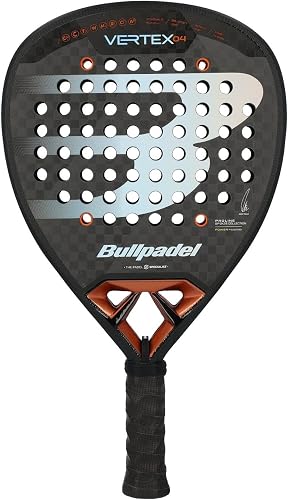
1. Bullpadel Vertex 04 — best overall, 9.0
The only diamond racket in our database that forgives a mishit without giving up smash speed. Five specialist sources and 450 owner ratings agree more strongly on this frame than on any other we have covered. Power 8.9, control 8.2.
What holds it back from a higher score is nothing: it is simply the best-balanced racket here. The caveat every source repeats is the stock grip, which is thin and slips when damp — budget for an overgrip.
Price band: £100–150 · Best for: intermediate to advanced players who finish at the net
2. Adidas Metalbone Ctrl — best for control, 8.9
Control of 9.3, the highest single dimension figure in the database, with one source placing it in the top 1% of every frame it has tested. The 16K aluminised carbon face and soft EVA core make it the pick for players who build points rather than end them.
Power sits at 7.5 and is not a finishing weapon. Watch the listings: the same 2025 model appears at two prices nearly £100 apart.
Price band: £100–150 · Best for: advanced players who win with placement

3. Nox AT10 Genius — most owners, 8.7
Agustín Tapia’s frame carries 851 verified owner ratings, the largest sample of any racket we have graded and nearly double the next one. Five independent sources rate it, and they agree on what it is: a control racket that can attack, with control at 8.6 and stability that holds up on defence.
What it is not is the cannon its pedigree suggests. Power averages 8.0 — below the Vertex 04. If you want the AT10 shape with real finishing power, the Attack version is the one, and it costs about £50 more.
Price band: £150–200 for the 18K · Best for: high intermediates and advanced all-court players
4. Babolat Technical Viper — most power, 8.5
Juan Lebrón’s frame produces the highest power figure we have recorded: 9.7, with five sources agreeing within 0.6 of each other. Durability is 9.0, also the best here — it is built for people who hit hard and often.
The cost is a small, high sweet spot. Off centre, the ball dies. Three generations are on sale at once and the price gap between them is enormous, so check which one you are buying.
Price band: £100–150 for the 2.5 · Best for: advanced left-side attackers

Babolat Technical Viper
5. Nox ML10 Pro Cup — most forgiving, 8.6
The largest sweet spot we have measured: 9.7 on forgiveness, comfortably ahead of everything else. Miguel Lamperti’s control frame is the one to buy if your problem is consistency rather than power, and it is repeatedly recommended for elbow and shoulder trouble.
Power is 6.9. Two caveats: it is not sold on Amazon UK, and sources split on whether it suits beginners or intermediates — our reading is that it is a fine first racket if you intend to build a control game.
Price band: £150–200 at specialist retailers · Best for: control players and anyone with arm trouble
6. Nox Equation — best value, 8.3
The cheapest racket here and the one we would hand to most intermediate club players. Six sources — the largest number behind any grade in this list — agree it delivers control of 8.2 and forgiveness of 8.1 at well under half the price of the frames above it.
Power of 6.5 is the lowest in the database, and deliberately so: the fibreglass face is why it is comfortable and why the ball leaves slowly. Three versions exist; the Soft and the Light are the arm-friendly ones.
Price band: Under £100 · Best for: intermediates who want control without flagship money

Nox Equation
Full comparison
| Racket | Grade | Power | Control | Forgiveness | Price band | |
|---|---|---|---|---|---|---|
| Bullpadel Vertex 04 Best overall |
9.0 | 8.9 | 8.2 | 7.4 | £100–150 | Check price |
| Adidas Metalbone Ctrl Best control |
8.9 | 7.5 | 9.3 | 8.4 | £100–150 | Check price |
| Nox AT10 Genius Most owners |
8.7 | 8.0 | 8.6 | 7.9 | £150–200 | |
| Bullpadel Hack 04 | 8.6 | 8.8 | 8.0 | 7.4 | £100–150 | Check price |
| Bullpadel Neuron | 8.6 | 7.7 | 8.6 | 7.5 | £150–200 | Check price |
| Babolat Counter Viper | 8.6 | 8.1 | 9.2 | 8.2 | £150–270 | Check price |
| Babolat Air Viper | 8.6 | 9.0 | 7.7 | 7.0 | £150–250 | Check price |
| Nox ML10 Pro Cup Most forgiving |
8.6 | 6.9 | 8.9 | 9.7 | £150–200 | See range |
| Babolat Technical Viper Most power |
8.5 | 9.7 | 8.2 | 7.3 | £100–150 | Check price |
| Nox Equation Best value |
8.3 | 6.5 | 8.2 | 8.1 | Under £100 | Check price |
| Nox X-One Not graded | — | 5.3 | 7.1 | 7.9 | Under £100 | Check price |
Prices are bands, not quotes: they move constantly and several of these rackets appear at very different prices depending on the listing. The live figure is always the one at the retailer.
Best padel racket for beginners
None of the top five is the right answer here, and that is worth saying plainly.
If you are in your first season, buy the Nox Equation — under £100, forgiving, and comfortable enough to play twice a week without your arm complaining. The Soft or Light versions specifically.
The Nox X-One is the other obvious candidate and it is cheaper still, but we could not grade it: only three independent sources exist, below our five-source minimum, and the two that publish numbers contradict each other by 2.6 points on the sweet spot. It looks like a sound first racket. We just cannot prove it, and we would rather tell you that.
What to avoid as a beginner: anything in this list with forgiveness under 7.5 — the Air Viper, the Technical Viper, the Hack 04 and the Vertex 04. They are excellent rackets that will punish an inconsistent strike.
How to choose between them
Three specs decide most of how a racket feels, and the scores above map onto them directly:
- Shape. Round means a low, wide sweet spot: forgiving, less powerful. Diamond means high and small: powerful, unforgiving. Teardrop and hybrid sit between, which is why they suit most players.
- Weight and balance. Most of these sit between 355 and 375 g. Where the weight sits matters more than how much there is — a head-heavy 365 g racket feels far more demanding than a head-light one of identical weight.
- Face material. Carbon is stiffer and faster; fibreglass is softer and kinder to your arm. It is the single spec that best predicts comfort, and it explains why the cheapest racket here is also one of the most comfortable.
One warning that applies to every racket on this page: the “Hybrid”, “Comfort” and “Soft” versions of a frame are different rackets, not colourways. Most reviews online do not say which variant they tested, and that single omission is the cause of nearly every disagreement we found between sources.
How these grades are built
We do not play-test rackets. For each one we collect every independent source we can find — specialist reviews, video analysis, verified owner ratings and the manufacturer’s datasheet — normalise them onto the same 0–10 scale, and weight them: specialist consensus 35%, owner consensus 30%, verified specs 20%, value 15%.
Three rules make the number mean something. Five independent sources minimum, or we publish the specs without a grade, as with the X-One. Retailer reviews of their own stock don’t count as opinion. And where sources contradict each other we publish the disagreement instead of averaging it away — it is usually the most useful thing on the page.
The full method, including where it is weaker than a hands-on test, is on how we grade.
The reviews behind this ranking
- Bullpadel Vertex 04 — 9.0 · 18 sources, 450 owner ratings
- Adidas Metalbone Ctrl — 8.9 · 5 sources, 144 owner ratings
- Bullpadel Hack 04 — 8.6 · 5 sources, 51 owner ratings
- Bullpadel Neuron — 8.6 · 5 sources, 75 owner ratings
- Babolat Counter Viper — 8.6 · 5 sources, 20 owner ratings
- Babolat Air Viper — 8.6 · 5 sources, 55 owner ratings
- Nox ML10 Pro Cup — 8.6 · 5 sources, no UK owner data
- Babolat Technical Viper — 8.5 · 5 sources, 59 owner ratings
- Nox Equation — 8.3 · 6 sources, insufficient owner data
- Nox X-One — not graded · 3 sources, below our minimum
Every review lists its sources with the date consulted. Browse them all under racket reviews.
Updated August 2026. This ranking changes whenever a new racket is graded. We do not re-order it for commercial reasons, and several rackets near the top earn us nothing at all.